Teacher Tech.

The Final Statements/Verses in the Holy Books

“The grace of our Lord Jesus Christ be with you all. Amen”

The Bible (Rev. 22:21)–The Book Of Revelations

“Say: “I seek refuge with the Lord of mankind
the King of mankind
the real God of mankind
from the evil of the whisperer
who returns over and over again
who whispers (evil) into the hearts of men
whether he be from among the jinn or mankind.”

The Holy Quran (Surah Al_Naas, Chapter 30)

“So Moses the servant of the Lord died there in the land of Moab, according to the word of the Lord. And He buried him in a valley in the land of Moab, opposite Beth-Peor; but no man knows his grave till this day. And Moses was 120 years old when he died; his eye was not dim, nor his natural force abated. And the people of Israel wept for Moses in the plains of Moab thirty days; and the days of weeping and mourning for Moses were ended. And Joshua the son of Nun was full of the spirit of wisdom; for Moses had laid his hands upon him; and the people of Israel listened to him, and did as the Lord commanded Moses. And there has not arisen since in Israel a prophet like Moses, whom the Lord knew face to face. In all the signs and the wonders, which the Lord sent him to do in the land of Egypt to Pharaoh, and to all his servants, and to all his land. And in all that mighty hand, and in all the great and awesome deeds which Moses performed in the sight of all Israel.”

The Holy Talmud (Torah: The Book of Deuteronomy 34-35)

“Wherever there is Krishna, the master of all mystics, and wherever there is Arjuna, the supreme archer, there will also certainly be opulence, victory, extraordinary power, and morality. That is my opinion.”

The Holy Bhagvad-Gita (Chapter 18, Verse 78)

……………………………………………………………………………………………………………………………….

And now, the missing endnote!

“AND THEY ALL LIVED HAPPILY EVER AFTER.”


[An adaptation from the ‘The Hundred-Year-Old Man Who Climbed Out The Window and Disappeared’ by Jonas Jonasson]

Standard
Teacher Tech.

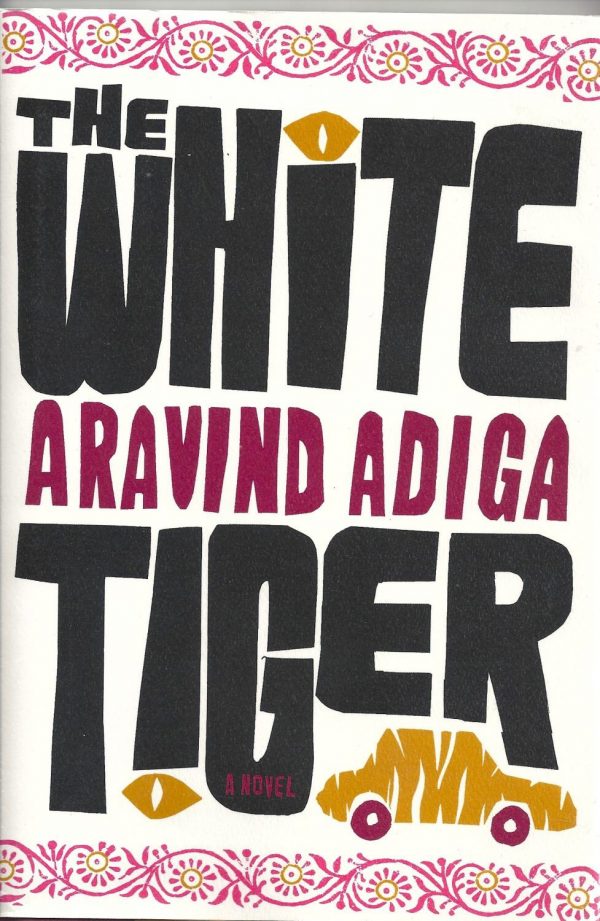
Stunned by the Commonplace: A Slanted Book Review of ‘The White Tiger’ by Arvind Adiga

Pity the gullible intellectual of the West who is so stunned by the tales of misery and malfeasance in the other world–the world of five billion people who drift along the waves of crime and corruption everyday only to stay afloat. This is India–one of a hundred or so nations whose inhabitants maze through decadence and debauchery everyday as a way of going around. To them, what’s so spectacular in passing a politician a few lakhs to get income tax “adjusted?” To them, what’s so special about “serving” an employer with the last remaining fiber in your body, and yet offer your ribs whenever he feels like kicking them? They see nothing wrong cherishing killer “entrepreneur” dispositions, when the only way left to move forward is off the cliff. These references quoted here are not in jest. They simply employ alternative definitions in the local vernacular. This is just how the society is set up, irrespective of the statutes of morality or common law. Displaying a flabbergast for such commonplace matters amounts to, either living the life of solitary confinement, or at best, a sheer disregard for the plight of the two thirds of the world population.

Stupefied must have been the judges of The Man Booker Prize, when pondering Aravind Adiga’s ‘The White Tiger’ for this ultimate prize in literary fiction. The Man Booker Prize is venerated for appreciating eonian themes and unequalled literary value of the submitted manuscripts. Little did they know in 2008 that the theme of class warfare, recounted through the fictional letters of Blaram Halwai to the Chinese Premier, is antiquated and banal in the other world, unworthy of any special mention, the least of which would be by an entity, as august as The Man Booker. For the literary device, Aravind borrows clichéd ciphers of cages and coops for the serving classes, and mongoose and snakes for the served; the metaphors so overused, they are not heard any more.  For the occasional odd one in the society, who somehow unshackles himself from the manacles of status quo, the author uses the worn-out reference to a tiger, only white though—hence the title, The White Tiger. Notwithstanding a truer depiction of the appalling socio-economic milieu of the twenty-first century India, and for that matter, Pakistan, Bangladesh, Sri Lanka, and almost every other underdeveloped society, the turbidity of this book has palled the brilliance of the award. It’s not the first time that an author of Indian descent has ranked among the likes of Ian McEwan, Howard Jacobson, Hillary Mantel, or Salman Rushdie; it’s just the first time perhaps in the award’s history that mediocrity has been mistaken for excellence. Neither the motifs of simmering revulsion to the status quo in the corrupt societies, nor the maneuverings of the rich and powerful to maintain it would stir the torpor of a common man. At best, they might earn a shrug and a laugh, topped with an expletive. That’s the real value of the subject matter in this novel.

Nonetheless, I did enjoy the entertaining Tamil accented English of the narrator in the audio version of the book. This alone must have helped me get through the entire book, without losing myself into the surrounding scenery on my usual long commute. Were it only for the insipid subject mater, I would have ranked it by ‘The Finkler Question’ of Howard Jacobson, but it failed to meet even the language standard that is a hallmark of all such noteworthy publications. The text complexity should measure for a sixth grade reader by the literacy standards of Indian education, which is pretty high among the English-speaking countries. There is hardly any humor worthy of a chuckle, which the author occasionally takes pain to extract from his readers. It’s an old Bollywood movie rewritten in the early 21st century India. Aravind should go read Life of Pi by Yann Martel to learn how to tell a good Indian story. 

(Two ** Out of Five *****)

Standard
Teacher Tech.

The Misconceptions: 72 Virgins (Hoors) Among We Muslims

There is no end to the ridicule we Muslims in the West are subjected to endure, every time someone gullible breaks down to the desperation of circumstances and carries out an act of extremism, giving his own life in the process. “So how many virgins is he going to get?” “Seventy-Two!” “Isn’t that a little too many?”. “Was he promised virgins or Virginians?” etc. etc. I remember growing up a Muslim, there didn’t seem anything peculiar about the reward of seventy-two virgins for the righteous one, nor anyone ever questioned this number. Where did this come from? Except for a few AHadith, there is no mention of the number of seventy-two in Qur’an. We need to dig deeper and root out the source of this misinformation.

The references to Kawa’ib Atraaba (وَكَوَاعِبَ أَتْرَابا) as mentioned in Surah An-Naba’ have attracted translations that range from sheepish ‘mention not!‘ by most Muslim translators to ‘full-breasted women‘ by mostly non-Mulim translators of the surah. Of the noted translators: Mawdudi, Yousuf Ali, Shakir, Sher Ali, and Rashad Khalifa, all are circumspect of the full translation of the verse and instead, leer away from any explicit mention of the reference to the physical attributes of houris. The non-Muslim translators, like Arberry and Rodwell, for their own motives, do translate this verse in full, connoting a libidinous nature of the Islamic reward system.

No wonder, the critics of Islam accentuate the shallowness of literal meanings of the sacred word, pinging support for their argument from such loud-mouth Ulema’ who, for their own incapacity to seek out intrinsic connotations, yell out the denotative definition of the today’s vernacular of Qur’an. Even a fleeting knowledge of linguistics and etymology should suffice to make skeptic of a professed scholar of religion. Languages evolve, and so do the contexts they are used in. Then, why we Muslims are so adamant on corralling the eternal message of Qur’an and Hadith in the temporal confines of literal definitions. It’s not what’s in Qur’an or in Hadith (for Hadith, I limit myself to what is considered Sahih and continually referenced) that is contentious, what I contend is how we interpret the contexts and the intent of the sacred word. All epic literature is allegorical, all ephemeral is literal. When we limit the word of God to its contemporary meanings, we take away its perpetuity. Literal meaning-making engenders quarrels, divisiveness, and a general discord. Allegorical meaning-making affords permanence, while embracing multiple perspectives of interpretations.

In this context, the vested opponents of Islam have propagated the issue of seventy-two houris or virgins to the point of contemptuous derision among the non-muslim world of East and West, North and South. Yet, there is no authentic repudiation of this grave misconception that has festered the minds of the believers and the non-believers alike. This article invites an open-ended discourse from among the Muslim intelligentia, as to how to interpret Qur’an, so its meanings remain current in every epoch of mankind, and not be dragged into silly tit-for-tat powwows on issues, like that of the seventy-two houris. Taken allegorically, the Ayat 33 of Surah An-Naba’ refers to a prominence of desires, not the swollen breasts of virgins. The desires could be of fame, of good health, of being loved, of accumulating knowledge. One may put any number to such desires, let’s put seventy-two here, and there are your seventy two houris, the ones which were promised. This allegorical interpretation also addresses the largely unresolved issue of ‘what’s in it for women‘ question. Count the seventy-two blessings one would wish for, and every one could aspire for their own houris, untouched by anyone else, just as promised. We have been given the wrong image of a houri all our lives, only because this image appeals the male-dominated theocracy of Islam. No matter how taxing it is to our brains to unlearn many of the things we have always been taught, it’s about time we shift the paradigm of interpretation of Qur’an and Hadith from literal to allegorical, in order to make Islam a truly universal faith that embraces the entire mankind, and not just about the one fifth of mankind.

References:

The Koran Interpreted: A Translation by A. J. Arberry (1996)

The Koran (Bantam Classic) By John Medows Rodwell (2004)

The Meaning Of The Holy Quran by Abdullah Yusuf Ali (2004)

The Holy Koran [Qur’an] by Muhammad Habib Shakir (2009)

Towards Understanding the Qur’an by Sayyid Abul A’l Mawdudi (2007)

The following reference sites were also sourced in for background understanding of the points of views on this topic, and they have the specific citations for some of the references quoted in this article. 

http://www.answering-islam.org/Quran/Versions/078.033.html

http://www.islamawakened.com/Quran/78/33/default.htm

http://en.wikipedia.org/wiki/Houri

http://www.wikiislam.net/wiki/72_Virgins

Standard