
Pity the gullible intellectual of the West who is so stunned by the tales of misery and malfeasance in the other world–the world of five billion people who drift along the waves of crime and corruption everyday only to stay afloat. This is India–one of a hundred or so nations whose inhabitants maze through decadence and debauchery everyday as a way of going around. To them, what’s so spectacular in passing a politician a few lakhs to get income tax “adjusted?” To them, what’s so special about “serving” an employer with the last remaining fiber in your body, and yet offer your ribs whenever he feels like kicking them? They see nothing wrong cherishing killer “entrepreneur” dispositions, when the only way left to move forward is off the cliff. These references quoted here are not in jest. They simply employ alternative definitions in the local vernacular. This is just how the society is set up, irrespective of the statutes of morality or common law. Displaying a flabbergast for such commonplace matters amounts to, either living the life of solitary confinement, or at best, a sheer disregard for the plight of the two thirds of the world population.
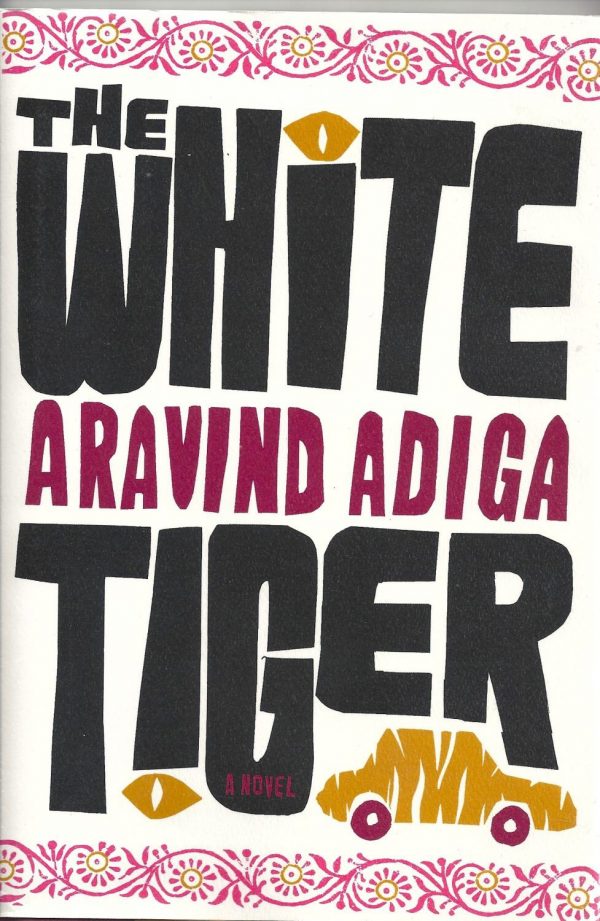
Stupefied must have been the judges of The Man Booker Prize, when pondering Aravind Adiga’s ‘The White Tiger’ for this ultimate prize in literary fiction. The Man Booker Prize is venerated for appreciating eonian themes and unequalled literary value of the submitted manuscripts. Little did they know in 2008 that the theme of class warfare, recounted through the fictional letters of Blaram Halwai to the Chinese Premier, is antiquated and banal in the other world, unworthy of any special mention, the least of which would be by an entity, as august as The Man Booker. For the literary device, Aravind borrows clichéd ciphers of cages and coops for the serving classes, and mongoose and snakes for the served; the metaphors so overused, they are not heard any more. For the occasional odd one in the society, who somehow unshackles himself from the manacles of status quo, the author uses the worn-out reference to a tiger, only white though—hence the title, The White Tiger. Notwithstanding a truer depiction of the appalling socio-economic milieu of the twenty-first century India, and for that matter, Pakistan, Bangladesh, Sri Lanka, and almost every other underdeveloped society, the turbidity of this book has palled the brilliance of the award. It’s not the first time that an author of Indian descent has ranked among the likes of Ian McEwan, Howard Jacobson, Hillary Mantel, or Salman Rushdie; it’s just the first time perhaps in the award’s history that mediocrity has been mistaken for excellence. Neither the motifs of simmering revulsion to the status quo in the corrupt societies, nor the maneuverings of the rich and powerful to maintain it would stir the torpor of a common man. At best, they might earn a shrug and a laugh, topped with an expletive. That’s the real value of the subject matter in this novel.
Nonetheless, I did enjoy the entertaining Tamil accented English of the narrator in the audio version of the book. This alone must have helped me get through the entire book, without losing myself into the surrounding scenery on my usual long commute. Were it only for the insipid subject mater, I would have ranked it by ‘The Finkler Question’ of Howard Jacobson, but it failed to meet even the language standard that is a hallmark of all such noteworthy publications. The text complexity should measure for a sixth grade reader by the literacy standards of Indian education, which is pretty high among the English-speaking countries. There is hardly any humor worthy of a chuckle, which the author occasionally takes pain to extract from his readers. It’s an old Bollywood movie rewritten in the early 21st century India. Aravind should go read Life of Pi by Yann Martel to learn how to tell a good Indian story.
(Two ** Out of Five *****)
 Keynote 180