
KEYNOTE 180
Teach · Lead · Learn · Grow — with AI EdTech
AI EdTech Weekly Brief
Issue No. 11 · November 9, 2026 — prepared by Keynote 180 for educators & education leaders.
Recap: Last week’s top story here was Howard County, Maryland becoming the first of the state’s four late districts to approve its own nine-standard AI policy, with one quiet pattern running underneath: nervous districts from South Carolina to Missouri were defaulting to SchoolAI as the one tool they’d still allow. This week the story jumped several levels up the chain — it wasn’t a district writing the rules anymore, it was Google.
This Week’s Trending Tool: Google Gemini — specifically its new “Guided Learning” mode — dominated every other story this week. On November 3, Google said Gemini would be off by default in Classroom and that its AI Overviews in Search would be replaced by Guided Learning on school accounts; districts that wanted AI fully off would also lose Search, since the two are “deeply integrated,” per VP Chris Phillips. By November 4, after former FTC chair Lina Khan, NYC Mayor Zohran Mamdani, and Senator Bernie Sanders all accused Google of coercion, the company backtracked and said schools could decline Gemini while keeping Search after all.
Top Use Cases
District Administrators
Google ties AI to Search access — then reverses under pressure 🚩
Google’s November 3 announcement that districts rejecting its AI tools would also lose Google Search set off an immediate backlash. Former FTC chair Lina Khan said Google was using its search monopoly to coerce schools into adopting AI; Senator Bernie Sanders called it “extortion.” By November 4, Google spokesman Davis Thompson confirmed Gemini and Search would be “separate controls” after all, letting districts turn off AI while keeping Search. Chris Phillips, Google’s VP of education, said the company is now trying to give “school leaders control over how they use AI in classrooms” — a reversal large districts like New York City and Los Angeles, which had already moved to restrict student AI use, will be watching closely.
Educational Leaders & Principals
Seattle Public Schools overhauls its AI and screen-time rules 🚩
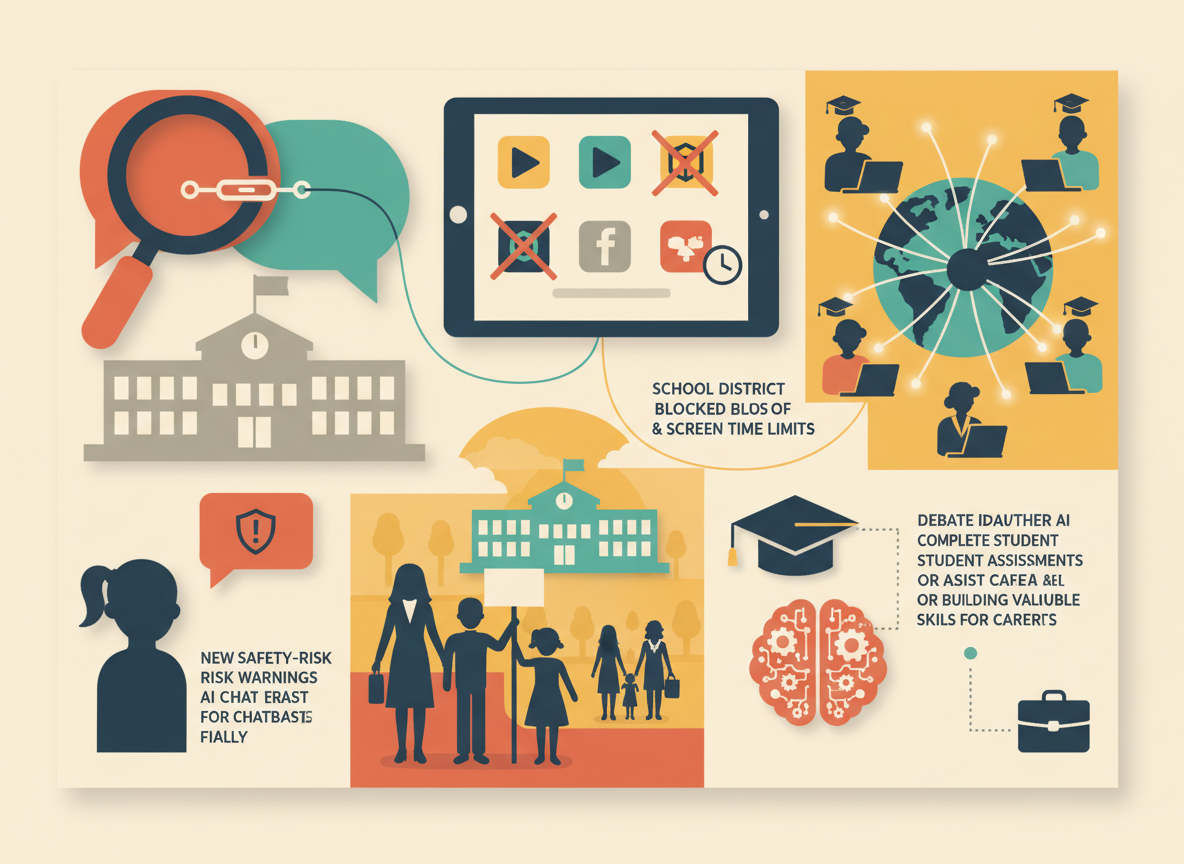
At its November 4 meeting, Seattle’s school board voted to block YouTube for K-5, bar Minecraft districtwide outside approved curriculum, and close a loophole that let students reach Gemini — banning it for every grade. Superintendent Ben Shuldiner said the district’s pandemic-era technology setup needs rethinking, while board director Evan Briggs noted the presentation included no data showing tools like MagicSchool actually improve learning: “We just don’t have that data.” The district paired the restrictions with a phased AI-literacy plan: no AI at all in grades K-2, third graders learning how AI works, sixth graders examining AI’s accuracy and bias, and high schoolers using it to stress-test arguments and get feedback on drafts.
Teachers
Google’s free AI training for teachers expands to five more regions
On November 3, Google announced its AI Educator Series is expanding to Spain, Brazil, Mexico, Australia, and sub-Saharan Africa after launches in the U.S., India, Korea, Malaysia, the Philippines, and the UK and Ireland. The numbers so far are striking: September sessions in India trained 80,000 educators ahead of opening to all of the country’s teachers, all 650,000 teachers in the UK and Ireland can now get digital-literacy training, and a Philippines partnership with government agencies aims to reach more than a million educators. In Malaysia, teachers reported saving three to five hours of prep time per topic — exactly the kind of workload relief districts here are still trying to measure.
Students
Why the fight over “Guided Learning” is really about kids’ safety 🚩
Underneath this week’s policy fight is a safety debate that predates it: Common Sense Media has rated Google’s AI Overviews an “unacceptable risk” and Gemini for K-12 a “high risk” for children and teens, ratings Chalkbeat noted are shaping how skeptically educators are reading Google’s latest changes. Google DeepMind research scientist Kevin McKee argued the redesign matters because students “need to do the work themselves” to actually learn — but Common Sense Media’s Eisha Buch countered that letting schools choose AI-or-Search isn’t a real choice at all. For students, the practical question is simpler: whether Guided Learning actually stops them from getting Gemini to just do the assignment, something Common Sense Media’s own reviewers say the current version still allows.
Parents
Seattle parents rally outside district offices over AI in classrooms
Seattle Families for Intentional Tech, an advocacy group pushing the district to pause student-facing generative AI entirely, rallied outside Seattle Public Schools’ headquarters on November 4 as the board met. Parent Erica Shutes-David, there with her husband Andrew and their second-grade son Kincade, said she wants her son “to use his brain” rather than lean on AI to finish work quickly. The district’s digital learning manager, Debra Knickerbocker, told parents the goal of the new rules is “student learning and student thinking” — but with no outcome data yet in hand, many families are left making the same judgment call on their own at home.
Employability & Career Readiness
The real question behind “Guided Learning”: which habit actually prepares kids for work?
Strip away the politics, and this week’s Google fight is a preview of a workplace argument students will face for the rest of their careers: do you let AI produce the output, or make it walk you through producing the output yourself? Google’s Kevin McKee is betting employers will eventually reward people who can still reason without a shortcut, which is why Guided Learning withholds direct answers in favor of step-by-step prompts. Critics like Common Sense Media aren’t convinced the distinction holds up in practice. Either way, the skill districts are now being forced to define — test an answer, spot where it’s shaky, know when to trust it — is precisely the one employers keep saying entry-level hires are missing.
1 Emerging Trend to Watch This Week — The policy fight has moved from the school board to the boardroom. Every week this fall, AI guardrails in K-12 have been written locally: a district vote, a state deadline, a superintendent’s memo. This week, one company’s product decision — made and partly reversed within 48 hours — reshaped the options available to every district in the country faster than any school board could act. Seattle’s board still found room to write its own rules on top of Google’s, but the sequence was telling: Google moved first, and local leaders spent the week reacting to it.
Sources
- Chalkbeat — Google Pushes Gemini “Guided Learning” Amid AI Backlash
- TechCrunch — Google Will Let Schools Disable Its AI Tools, But Not Without Sacrificing Search
- GovTech — Google Reverses Decision to Turn Off Search for Schools Not Using AI
- KUOW — Seattle Public Schools Tightens Student Access to YouTube, Minecraft and AI
- Google — Expanding AI Educator Training to New Countries
Edited by Dr. H. M. Saleem, — Founder, Keynote 180
Discover more from Keynote 180
Subscribe to get the latest posts sent to your email.

